AI and Coding Classes for Kids – Learn to Build AI

Learn how to train AI models, write code and create intelligent applications through practical, project-based learning.

Train your own AI. Build your own projects. Bring your AI ideas to life.

• No previous coding experience required •  Founded by University robotics Lecturer • small-group classes – maximum 2 students online • Free online trial

reviews-Matris-robotic

AI-and-Coding-Basic Matris-Robotic
AI-Coding
AI-and-Coding-Intermediate-Matris-Robotic

Learn Artificial Intelligence Through Coding and Creativity

At Matris Robotic, children discover how artificial intelligence works by building and training their own machine-learning models. Rather than simply using existing AI applications, students learn how computers recognise patterns, make predictions and improve through examples.

Through our structured AI and coding curriculum, students develop two connected areas of knowledge:

1. Artificial Intelligence & Machine Learning 

Learn how AI recognises images, sounds and body movements. Collect training data, label examples, train models and test their predictions.

2. Coding & Programming

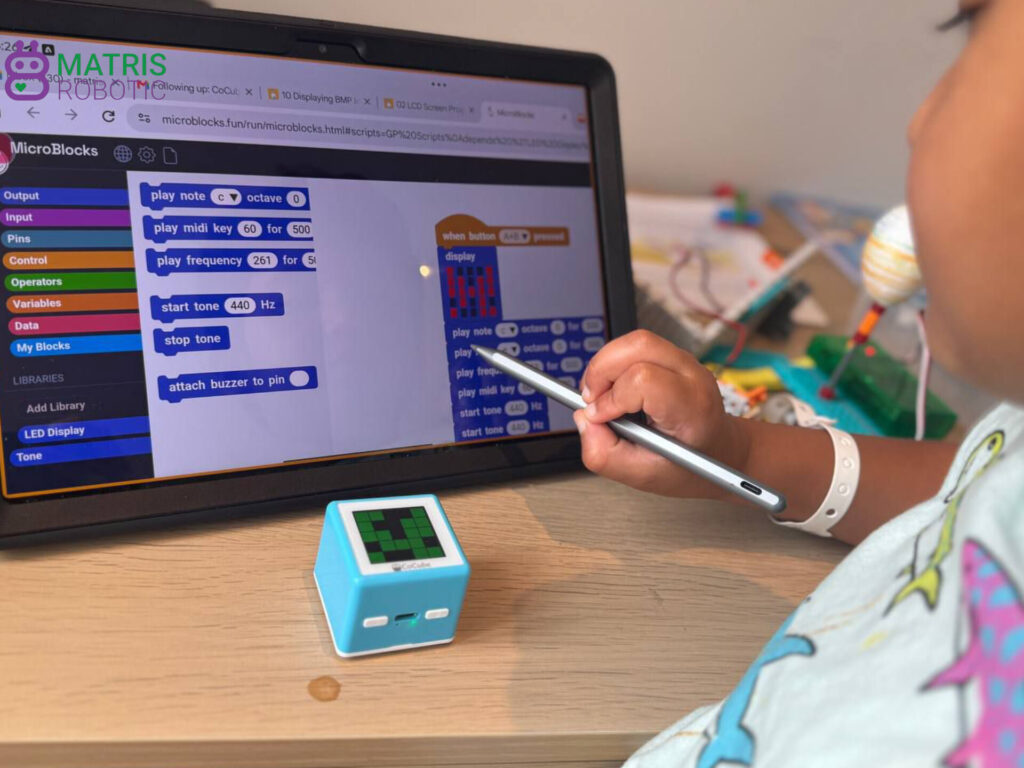
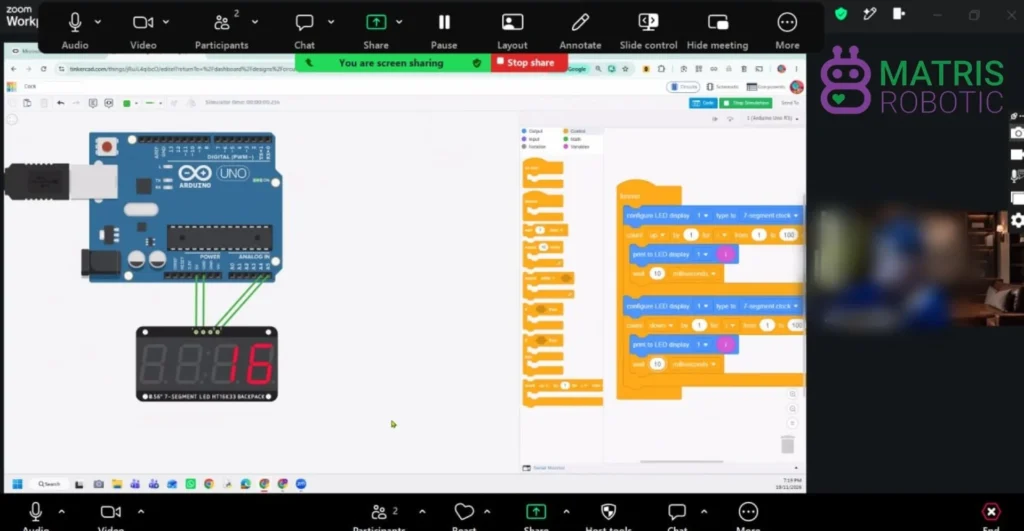
Learn AI programming concepts through visual coding and gradually progress to Python. Use code to create games, animations, interactive applications and intelligent systems.

3. Intelligent Systems & Robotics

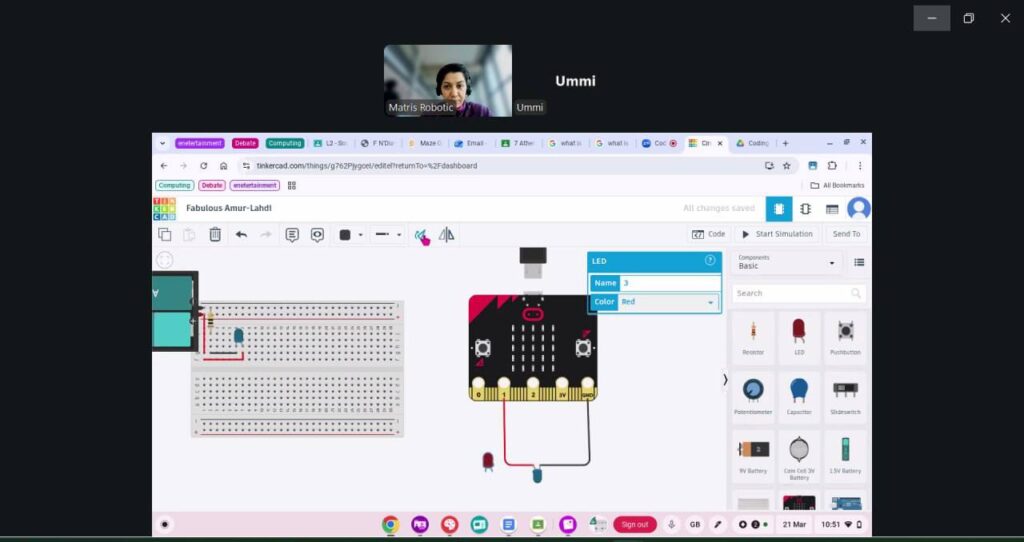
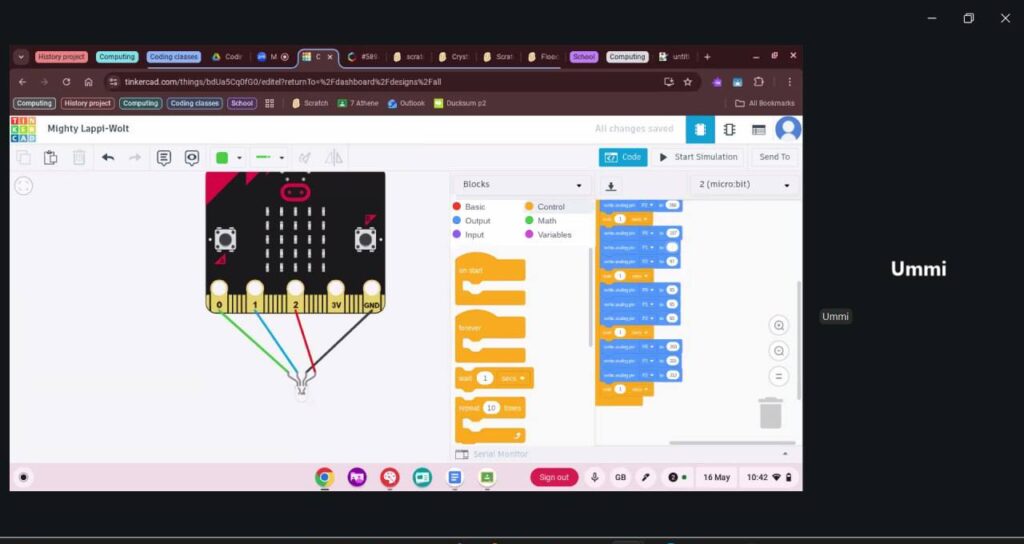
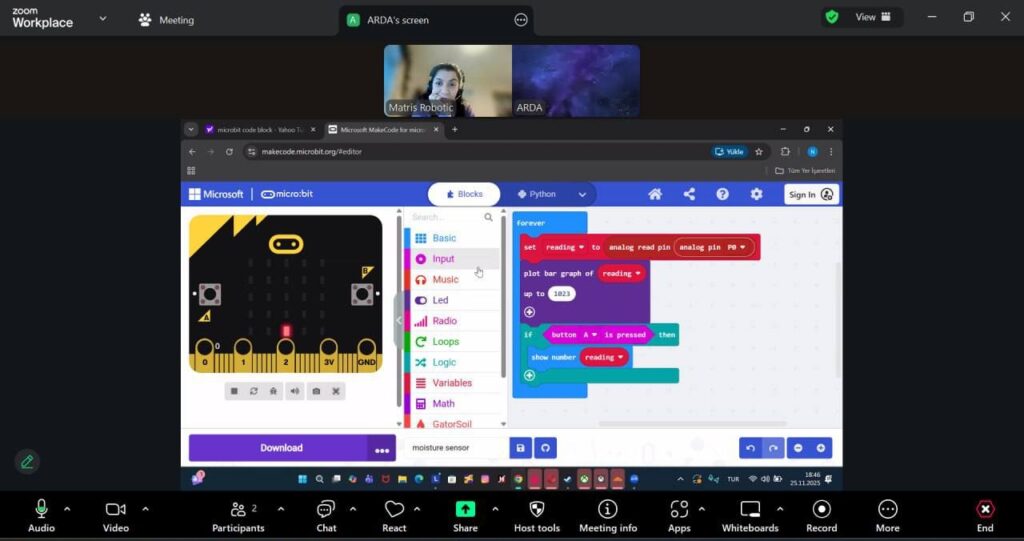
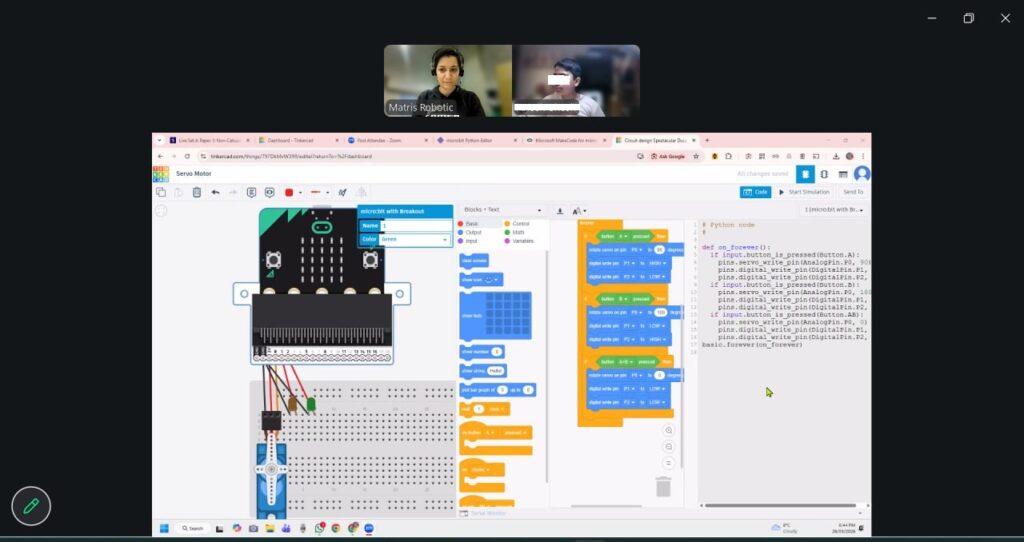
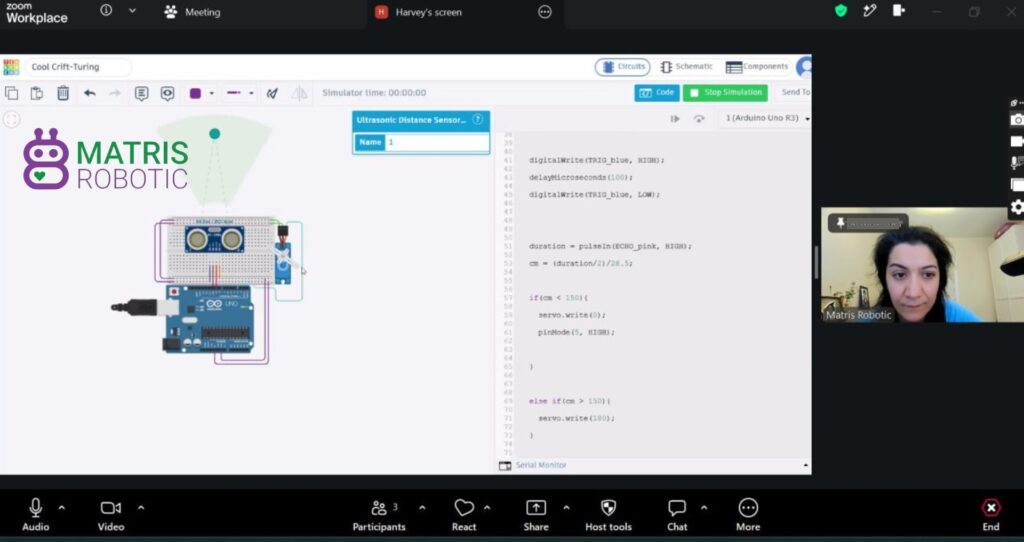
Connect programming and AI with sensors, electronics and hardware to create systems that can sense, respond and interact with their environment.

The specific method of Matris for Online AI & Coding courses are designed and delivered by University lecturers and researchers form UCL and University of Kent. They are university-level courses regularly updated to be alligned with the latest findings in AI and support UK’s computing and Design & Technology goals and National Curriculum in England for computing.


How Children Learn AI

Train Your Own AI Models

Students explore supervised machine learning through practical experiments. They collect their own examples, organise data into categories, train machine-learning models and evaluate how accurately their AI recognises new information. No previous machine-learning experience is required.

Students learn to:

  1. Collect some images (like fruits), sounds and movement examples.

  2. Organise examples into labelled categories (through Feature Extraction methods).

  3. Train their own AI classification models (through Classification methods).

  4. Test predictions using new examples.

  5. Identify mistakes and improve model performance.

  6. Export and use trained models in interactive coding projects.

Example projects:

  • Train AI to recognise and sort different fruits.

  • Create a sound-recognition application to sort nuts.

  • Build a gesture-controlled game.

  • Recognise recyclable materials using image classification.

Once students have developed the basic knowledge on Artificial Intelligence and its concepets like machine learning, Feature extraction and Classification, they progress to coding and software development. Students combine these subjects with programming skills through practical, age-appropriate and project-based learning activities. 


AI-and-Machine-learning-Matris-robotic

Discover How AI Learns – The Matris Supervised Learning Method

At Matris Robotic, students don’t just use artificial intelligence. They explore the principles behind how machine-learning algorithms learn from data.

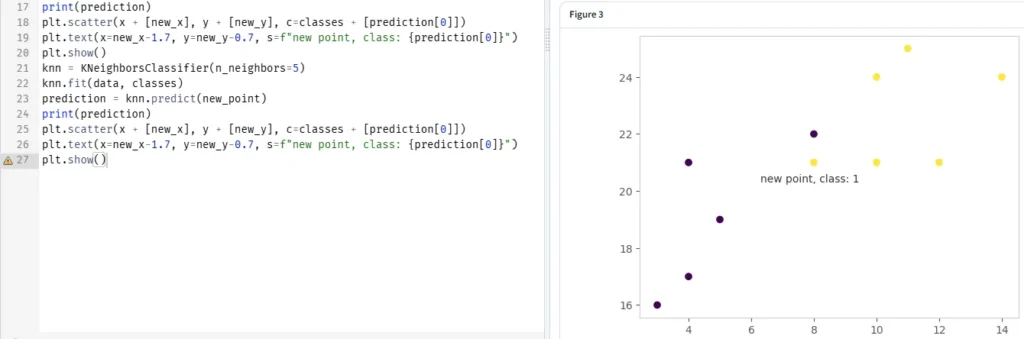
Our specially developed teaching method introduces supervised learning through the K-Nearest Neighbours approach (Matris KNN Learning Method) to understand the algorithmic logic.

Students learn how a computer can classify new information by comparing it with previously labelled examples and identifying the most similar data points.

Through Matris KNN Learning Method, students discover:

  • How training examples are collected and labelled.

  • How computers compare similarities between data points.

  • How distance and the nearest neighbours influence predictions.

  • How the value of K affects classification.

  • How an AI model makes predictions about unfamiliar examples.

  • How training data influences the quality of predictions.


The learning experience:

Students experiment with different examples, change the number of nearest neighbours and observe how the AI’s predictions change. This helps them understand the logic behind supervised machine learning, rather than treating AI as a black box.

From AI to Coding

Turn Your AI Models into Interactive Applications

Learning AI becomes even more exciting and engaging when students use their trained models to create something of their own.

Students combine machine-learning models with programming to develop interactive games, applications and intelligent systems.

They learn how to connect AI predictions with programming instructions, enabling their applications to respond to images, sounds and movements.

Examples of what students can create:

  • An AI-powered game that recognises hand gestures.

  • A smart sorting system that recognises different nuts from their droping sound.

  • A smart sorting system that recognises different materials from their photos.

  • Interactive applications that respond to user input.

A Structured Learning Journey from Beginner to Advanced

Our courses follow a progressive learning pathway. Students develop their knowledge step by step, moving from fundamental AI concepts to more advanced programming and intelligent applications.

AI & Coding Fundamentals

  • Introduction to artificial intelligence.

  • Understanding supervised learning.

  • Collecting and labelling training data.

  • Training image and sound recognition models.

  • Introduction to Scratch programming.

  • Creating simple AI-powered games.


Machine Learning & Application Development

  • Exploring classification algorithms.

  • Understanding the KNN method.

  • Training and evaluating AI models.

  • Scratch-based application development.

  • Introduction to Python.

  • Developing interactive AI applications.


AI Engineering & Intelligent Systems

  • Supervised machine-learning algorithms.

  • KNN, decision trees and classification.

  • Python programming.

  • Data preparation and model evaluation.

  • Introduction to neural networks.

  • AI integration with robotics and hardware.


Free Trial Online Classes

Method of Matris is fully structured and carefully designed by our team to be compatible to each student situation. It integrates AI & coding with scientific understanding, enabling students to develop strong computational thinking, problem-solving abilities, and technical skills while applying their knowledge to real-world challenges.
Our flexible online workshops offer a unique blend of creativity, innovation, and hands-on learning.  No commitment. No Credit Card.

More information:

  • Starts immediately
  • Type: live online with one tutor
  • No. of Students: Max 2 (small class)
  • Lessons: Weekly (60 min per week)
  • Duration: 3 months
  • Assessment: Project-based
  • Age limitation: 5 plus
  • 12 lessons per term
  • Hardware/Software: laptop/computer (PC or Mac) with Internet Browser
  • Payment: Monthly (Cancel anytime)
AI-and-Coding-Basic Matris-Robotic
AI-Coding
AI-and-Coding-Intermediate-Matris-Robotic

Why Learn AI with Matris Robotic?

Matris Robotic combines academic expertise, practical engineering and structured teaching to help children understand and apply artificial intelligence.


University Expertise

Courses designed and delivered by university lecturers and researchers with expertise in robotics, artificial intelligence and engineering.


Understand How AI Works

Students explore the principles of machine learning, train their own models and investigate how algorithms make predictions.


Small, Interactive Classes

Maximum two students in online classes, allowing tutors to provide individual guidance and feedback.


Practical Project-Based Learning

Students apply their knowledge through games, applications, machine-learning experiments and engineering projects.


Progressive Curriculum

A structured journey from introductory AI and visual programming to Python and advanced machine learning.


Established Teaching Experience

Matris Robotic has been providing robotics, AI and coding education since 2012, with experience teaching students internationally. Want to learn more about the importance of AI & Coding and discover the unique Matris Robotic teaching method? Click here to explore more.

keyboard_arrow_up